Blog

THE FOLLOWING POST FROM JANUARY 2013 IS REPRINTED WITH PERMISSION FROM THE SARAPIS FOUNDATION.

flosolutionsfront2When “Superstorm Sandy” hit New York City on October 30th, dozens of relief organizations, hundreds of grassroots groups and thousands of people mobilized to provide aid to those most affected. The challenge of coordinating such a relief effort was felt by everyone involved.

How do you keep track of who has what resources, who is requesting those resources, where the resources are now—and where they’ll need to be tomorrow? How can you see whose needs have been fulfilled and who still needs help? The list of information challenges is extensive.

Sarapis saw the information management challenge coming. Within days of the hurricane we were on-location, helping grassroots-organized disaster relief hubs collect data more efficiently and feed it to folks who could turn it into actionable information for relief providers. We embedded ourselves in grassroots efforts and turned paper forms into spreadsheets and spreadsheets into database tables—and now we’re integrating the data in those tables together through a free/libre/open-source (FLO) disaster management solution provided by the Sahana Software Foundation.

The Sahana Software Foundation shepherds a number of FLO disaster management solutions.  Sahana was created after the Indian Ocean Tsunami of 2004. Its first iteration was developed through a series of code sprints organized by local information and telecommunications companies in Sri Lanka, who wanted to develop a FLO resource management system that would enable a wide range of relief efforts to coordinate supplies, staff and volunteers over a massive area.

Within a week of Hurricane Sandy, the Sarapis team was touring Mark Prutsalis, CEO/President of the Sahana Software Foundation, around a half dozen community-organized relief hubs and sites, introducing him to key stakeholders and decision-makers who would ultimately determine whether the Sahana system would be implemented at their locations. Less than a month after Sandy hit New York, Sarapis is proud to announce that the Sahana system at http://sandyrelief.sahanafoundation.org is operational, has dozens of active users, and is being used at the largest “Occupy Sandy” communications hubs. It has been demonstrated for folks at a wide variety of voluntary organizations active in disasters (VOADs) including the American Red Cross, New York Cares, United Way and government agencies such as FEMA. It’s also likely that Sahana will be used on a permanent basis by grassroots and community organizations to provide various forms of relief to individuals and groups in the greater New York City area. Our work has both facilitated the use of an amazing FLO resource management platform by grassroots organizing efforts and raised the profile of the Sahana Eden system in the eyes of large institutions who will hopefully, at some point in the future, abandon the proprietary systems that grassroots organizers can’t easily access in favor of FLO systems that everyone can use.

The Sahana Software Foundation’s commitment to supporting grassroots, community-led organizing endeavors has been astounding. Mark Prutsalis, the CEO/President of the Sahana Software Foundation is a resident of Brooklyn and has gotten deeply involved in the relief efforts, touring sites, organizing trainings and providing less-experienced disaster responders with a sense of confidence that only 20 years of disaster relief work can provide. He also flew in Sahana’s core team of developers to New York so they could work with the grassroots efforts in the Occupy Sandy network. Michael Howden of New Zealand and Fran Boon of England jumped right in, visiting sites, surveying users and making everyone feel closer to the technologies they were using for their work. They worked with everyone from user experience designers to warehouse floor managers and comms/dispatch teams to troubleshoot issues, build new features, and generally increase the usefulness of the software. They spent weeks in New York and Mark documented their experience better than I ever could on the Sahana Foundation blog here and here.

Why did the Sahana Foundation dedicate over $40,000 worth of their time to the Occupy Sandy effort? Because they recognized it as something familiar: a physical manifestation of the free/libre/open movement. Unlike decades-old institutions that structure themselves around an industrial-age information technology ecology—fax machines, memos, bosses’s bosses’ bosses, and people who resist change in order to preserve their jobs—Occupy Sandy is a temporal network that organizes itself around its technological capabilities. For example, for a shipment of supplies to go out to a relief location, someone needs to create a waybill that has a list of item to be included in the shipment and a destination. If a technology (such as Sahana) comes along that automatically generates printable waybills, the person who used to perform that task isn’t going to lobby to keep their job—they’re going to go do something else.

Occupy works because everyone is trying to make useful contributions to the network, older institutions work because everyone is trying to keep their jobs. As a blank slate that molds itself to the technologies it can access, Occupy can be a technologist’s dream, but it can also be a nightmare. In traditional institutions where bosses tell their underlings what technologies to use, it’s easy to get people to use nifty new technologies: you just have to convince the boss that it’s a good idea. In the Occupy network, each user has to be personally convinced that a tool is worth his or her time. This is a complicated task that more closely resembles bringing a product to market than it does training folks to use software in an organization. And that is the unique work we do at Sarapis: getting people who perform the core functions of a healthy and effective civil society to use FLO solutions.

NEREIDS is an EU-funded project which brings together Civil Defence agencies and NGOs from Greece and Cyprus to work on improving the response to Maritime Incidents such as Oil Pollution.  The context is the high volume of shipping in the eastern Mediterranean and the exploitation of newly-found deposits.

This project has selected Sahana Eden as being the most suitable tool to bring together disparate data sources and to visualise them in the same place for enhanced situational awareness.

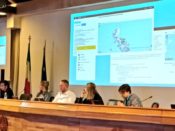
Martin Thomsen, Vice Chair of the Board of the Sahana Software Foundation, and Fran Boon, Chair of Products Development Committee, attended a Scenario workshop in Nicosia, Cyprus that brought together a multidisciplinary group of people to share their ideas. The meeting was well attended including by a Minister and an EU commissioner.

The Sahana presentation was well-received as a suitable tool to allow the diverse stakeholders involved to collaborate more easily through strong support for data integration and controlled sharing of data. The visualisations allow for easier analysis by pressured decision makers.

The next step is a tabletop exercise in July in Greece at which Sahana is planned to be used to visualise the evolving situation. There is also interest in doing a SahanaCamp to bring stakeholders together to learn how to maximise the value that this tool can deliver.

tornado_shelterOften people are misconstrued by alert messages and act inappropriately because they have not fully understood the message; especially, when they are short-text messages with partial information. There are many challenges with cognition, or understanding, of public warning messages. UNESCO estimates, on average, 30% of South/West Asians and Sub-Saharan Africans to be illiterate. Those countries combined account for ~40% of the world’s population.

World Bank tourism statistics have estimated over 955 million departures over the past 4 years (2008-2012) and the numbers to rise to 1.6 billion per annum by 2020. Could a Chinese tourist in USA, or any other person alien to English for that matter, understand a rapid-onset Tornado warning text-message?

Studies show that every country in the world is home to more than one language; on average 6 languages, according to recent studies by Ethnologist. In most cases it is above 50, if we consider regions such as Europe, Asia, and Central Africa. Addressing alerts in each language is cumbersome. Although the Common Alerting Protocol (CAP) content standard allows for carrying a message in multiple languages, delivering them in each language overwhelms the communications networks.

“Symbols in Alerting” was the basis of my talk at the 6th Common Alerting Protocol Implementation Workshop that took place in Geneva, Switzerland (23-25 April 2013). There were seventy participants (70) from thirty severn (37) countries representing and several International organizations, Sahana Software Foundation was one of them.

CLICK TO READ THE FULL REPORT

It is best to focus on “symbols in alerting for mobiles”. The challenges are in addressing all makes and brands. They typically vary between iOS, Android, Windows, Symbian, so on and so forth. The most effective way may be to host a small applet along with the pictograms in the mobile phone memory. Thereafter, trigger the appropriate pictogram using CAP message for display. A customizable generic applet can be developed. Cellular Operators can adopt the applet, then customize it for the country-context, based on the country CAP-profile. The customized applet can be deliver, over the air, to the subscribers. Thereafter, the subscriber could further customize as to which alerts they would like to see and at what threat levels. The symbol-based alerts on the mobile can be triggered using Cell-broadcast, SMS, or HTTPS (REST-ful) strings.

Symbols are indeed effective provided they carry both the hazard and the required response action. Colours and Numbers are a good way to present the priority (or the severity, certainty, and urgency) of the message. The common consensus of the workshop participants was that “symbols in alerting” is important and some initiatives must be exercised to research and develop a framework that is in in-line with the CAP standard. It may take time to understand the functional requirements, design parameters, and the process variables.

Recently, in Geneva, I met Massimo Cristaldi (CTO  Intelligence for Environment & Security – IES -  Solutions) at the CAP Implementation Workshop (23-25 April 2013). He mentioned, during a tea-break chat, that they evaluated the Sahana-Eden CAP Broker for possible adoption. Given that the Sahana-Eden CAP Broker was not fully developed, they default to building their own. Moreover, he was not at liberty to say whether or not they adopted parts or the existing version in their build; my hunch is that they did. This is an initiative driven by Italians for the European Union. I was thirlled to learn that the Sahana-Eden CAP Broker was, quietly, gaining some traction; especially, it being developed by students through GSOC and GCI programs.

IES developed “JIXEL” is a suite of web based application that allows emergency services (fire and rescue, ambulance, police, civil protection) to seamlessly exchange information during day-by-day operations and when managing catastrophic events and their aftermath. JIXEL adopts CAP as the interoperable content exchange protocol. In addition to the software products, JIXEL also focuses on hardware for rapid routing and sharing of crisis information.

Possibly, the Sahana Software Foundation’s EUROSHA project could find synergies in collaborating with IES Solutions in complementing their efforts by offering some of the available modules in managing European humanitarian crises.


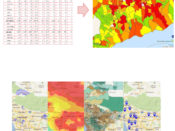
The Sahana Software Foundation is excited to be working in collaboration with the Los Angeles County Department of Public Health and RAND Corporation to develop a Community Resilience Mapping Tool using the Sahana Eden Open Source Disaster Management Software. This  is an initiative within the Los Angeles County Community Disaster Resilience (LACCDR) project whose aim is to engage community-based organizations in providing leadership and partnership to promote community resilience in the face of public health emergencies such as pandemics and disasters. The tool will help communities to collect their own data on  vulnerability, hazards and resources within their communities. By looking at the relationships between this data and data from external sources such as the Census and US Geological Survey, communities will be able to understand who and what will be affected by disasters and what people need, to help them make decisions to  enhance their own resilience.

Community Resilience Mapping Tool Goals

Community Resilience Mapping Tool Goals

Read More→

To conclude our blog post series about the Sahana Internship Program, we interviewed Mark Prutsalis, CEO of the Sahana Software Foundation, and asked him to share his vision for Sahana’s future and the strategic role of its internship program.

IMG_2435_resize

Estève Giraud: Hello Mark. Thank you for your time! Could you tell us a little bit about your first steps into the disaster management field? What led you there? And to Sahana?

Mark Prutsalis: I first got involved in disaster management over 20 years ago (oh my!).  After graduating from college, I went to work for a small non-profit organization called Refugees International whose mission was to advocate for refugee rights.  I gained field experience in Cambodia, Thailand, Bosnia and Croatia, and Central Africa during the Rwandan genocide and refugee crisis before embarking on the next stage of my career with UN agencies (UNHCR and  UNICEF), as a consultant to the US Department of Defense, and in the private sector.  All told, I’ve responded to over 20 major disasters – both man-made and natural disasters, on every continent but Antarctica.  Throughout this career, I often managed technology projects for humanitarian organizations.

In 2004, I was helping lead a Crisis Response Team responding to the Indian Ocean tsunami.  During our time in Sri Lanka, where I stopped briefly before heading up operations in Banda Aceh, Indonesia, we helped the local IT community with understanding the requirements for an open source disaster management system to assist the response efforts in Sri Lanka.  Our team later helped provide training to students who used this system to collect data on missing persons, shelter locations and supply needs within the country.  This local effort evolved to become the Sahana project, and I stayed involved as an advisor thereafter. I also helped establish the Sahana Software Foundation when Sahana was spun off from the Lanka Software Foundation in 2009.

EG: Sahana’s mission is dedicated to the mission of saving lives by providing information management solutions. Could you explain to us a bit more about Sahana’s humanitarian principles?

MP: “Sahana” means “relief” in Sinhalese – one of the national languages of Sri Lanka, the place that gave birth to Sahana’s software.  The mission of Sahana has always been inextricably linked to saving lives and easing human suffering, not just to develop good technology solutions.  The Sahana community has always worked to conform with humanitarian principles, in particular the Red Cross Code of Conduct, which I consider to be in alignment with the principles of humanitarian free and open source software.  We seek to empower communities to help themselves and not just be dependent on external sources of assistance.  I am particularly proud of our work with Occupy Sandy in New York following Hurricane Sandy, where we saw Sahana Eden software adopted by multiple community-based organizations committed to mutual aid and empowerment.

EG: Why do you think open source software can bring innovative and efficient solutions to this area?

MP: While the scale and scope of natural disasters is projected to increase due to factors such as urban population growth and climate change, there is a limited market for “disaster management” technology – despite the demand.  Most humanitarian organizations and smaller jurisdictions cannot afford the high cost of solutions with a limited global customer base.  Most funding for disasters is spent on response and recovery, with only a tiny percentage spent on mitigation and preparedness.

I believe that humanitarian free and open source software (HFOSS), driven by a compelling mission consistent with both humanitarian principles and with a solid technological foundation, is best positioned to create the innovative solutions needed to save lives.  We’ve seen the dramatic impact of crisis mapping and HFOSS solutions like Open Street Map, FrontlineSMS, Ushahidi and Sahana, have had in assisting in the response to major disasters in Haiti, Japan and the United States.  Our development model, a virtuous circle of contributions, whereby we make code freely available to humanitarian organizations and governments, with enhancements from one project benefiting future users has gained traction and we are now seeing huge demand around the world for humanitarian solutions based on Sahana technology.

EG: Along with your Happy Holidays greetings, you said Sahana will be challenged in 2013 by “the need to grow and professionalize rapidly to respond to a diverse set of customers while continuing to build the best open source software for disaster management on the planet”. How is Sahana’s intern team going to help in this regard?

MP: The internship program is a key component to our plans for growth.  The increased demand for Sahana based solutions is challenging in many ways.  We need to support more projects – both on a volunteer basis and a professional one.  Over the past six months, the Sahana Software Foundation has received grants to execute on projects for the public sector and humanitarian organizations in Africa (EUROSHA), for the Los Angeles County Department of Public Health, and for a public-private partnership organization in Los Angeles focused on community resilience.  I see our internship program as a means to train the next generation of Sahana developers who will help lead new projects with new humanitarian organizations.

EG: How many people currently contribute to Sahana? Do you see the Sahana internship program helping to bring in long-term contributors to Sahana? How will the internship program do so? 

MP: It’s hard to measure the number of active contributors to Sahana software products, given the global and voluntary nature of our community.  There is a solid core of contributors of several dozen developers responsible for all of our products – tied to projects with government and humanitarian organizations, in addition to numerous casual contributors.  In the past, our only internship opportunities have been through the Google Summer of Code Program.  This program has been highly successful in recruiting long-term contributors to Sahana software – including former director Mifan Careem, current Product Development Committee member Praneeth Bodduluri, and recent graduate Ramindu Deshapriya.  Current intern Ashwyn Sharma has completed two Google Summer of Code internships with Sahana Eden.  I see our internship program as providing a year-round opportunity for students to gain experience coding with Sahana software – which will keep people engaged and interested in being a part of the Sahana community.

EG: What are the core competencies needed to improve the organization? Does it require a more process oriented approach to different tasks? What tasks performed by the interns lead in this direction?

MP: There is an entirely different level of expectation and accountability when someone is paying for a project.  We can’t afford to fail or take more time than is demanded by the project.  We need to train more people to be able to execute on projects independently – whether for the Sahana Software Foundation – or for other ventures.  I hope that our internship program helps provide the experience necessary for those interns to become candidates for paid developer positions with the Sahana Software Foundation.

Our communications interns are also a critical component to our organizational growth.  Our ability to provide effective outreach to existing and new customers and to communicate effectively to our donors and community is critical to our organizational health and growth.  It has been challenging to find qualified volunteers from within the technology community to take on these responsibilities and I hope to expand this into a year-round program.

EG: Could you give us an example of the diversity of Sahana’s customers? Does Sahana software need a lot of customization to be implemented within a specific organization? How can the internship program encourage new people and organizations to adopt Sahana software?

MP: There is great diversity in Sahana’s user base.  There are professional Emergency Management agencies, national and local government agencies, international humanitarian organizations, and local community based organizations.  Some are wholly funding their project development with the Sahana Software Foundation or companies like AidIQ; others rely totally on volunteers or internal resources.  I want the Sahana Software Foundation to support all Sahana users – whether they are paying for our support or not.  The internship program is a great and cost-effective way for us to support these users, as well as enhancing our core capabilities to support multiple projects.  While we are not yet at the point where we can commit an internship resource to an organization, this is an idea I would support in the future.

EG: What makes Sahana’s software the best open source software for disaster management on the planet? Most of the interns have development skills, how can they make some critical improvements? 

MP: Ha ha.  Thanks for calling me on a bit of hyperbole…. but I do believe it.  In addition to always being focused on our core mission – helping the survivors of disasters and saving lives – one of our traditional areas of focus has been to develop solutions where no other solution exists.  That has led to Sahana having a unique set of capabilities for the resource management of staff, volunteers, inventory, assets, requests for information and assistance – all the critical components that humanitarian organizations and communities need to prepare for, respond to and recover from disasters.

Development of new features and enhancements to Sahana software needs to be driven by real-world customer needs and requirements – not just a developer’s idea for how something could be done better.  That remains a critical component to innovation but such innovation should only be done in partnership with user needs and feedback.  I think we’ve done a great job over the past few years at focusing our development priorities on real-world projects; this should continue to influence the tasks that we ask our interns to work on – whether through our own internship program or through Google Summer of Code or Google Code-In.

EG: In the long run, what is your vision for the future of Sahana and its community?

MP: I’d like to see us offer a hosted system for new users that doesn’t require any developer experience – like Crowdmap does for Ushahidi – for all of our Sahana products.  Having technical expertise is one of the biggest barriers to entry we face.  Based on our recent experience deploying Sahana Eden for new customers in the US and abroad, I think we are approaching the point at which we can offer an out-of-the box best-practices based configuration of Sahana Eden that would be instantly deployable and usable by humanitarian and community-based organizations, complete with a complete set of user documentation and training materials.  The success of our communications internship program will have a lot to do with this potential.

I’d also like to see enough grants and project funding to support the Sahana Software Foundation having a permanent small core team supplemented by a roster of developers and interns.  Putting resources into managing the business side, including marketing and outreach, finance and administration, is often an undervalued yet critical component.  I think we are on the right path towards realizing this within the next year.

An expanded internship program will be a major part of our growth plan and give us the resources and potential to be successful.

EG: Thank you very much Mark for your detailed responses. And many thanks to those who followed this blog series on the Sahana Internship Program. As you might have guessed from the interview, a second round might be coming….

eero5_300pxEero Sario has been volunteering for Finnish Red Cross since 1998. After having worked first as a software developer he moved to humanitarian field where he had his first mission in 2008-09 with IFRC in the Caribbean managing a hurricane appeal. Then he worked as a WatSan delegate in the aftermath of the Haiti earthquake and started the current RMS project end of 2010.
You want to know more about the RMS?
Join us during the next Community Call on 12th March to talk live with Eero, our special guest
Where does the creation of the RMS come from?
Eero Sario: Our Asia Pacific national societies have been asking for a system like RMS for some years now and in 2010 we had the resources available to start the development.

The creation of the RMS fits into the IFRC’s global ICT strategy. Can you tell us more about it and how does it relate to the decision to create RMS?
ES: It is ambitiously to create “one village” where the location does not matter for the conversations and the work to take place. IFRC is working hard to support the less developed NS to cross the “digital divide” in order to support the main strategy. One way is also to employ “discover and harvest” approach where we identify working solutions already in use and then scale them up to make them available more widely to IFRC members.
IFRC is also working actively on beneficiary communications and also especially striving to improve two-way communications. We have already used mass SMS communications extensively in Haiti earthquake 2010 and Pakistan floods in 2011 among other disasters and have lots of plans on how to improve in this field.

RMS is not an IT project but a programme support tool. Why is it important for the project to be the responsibility of the program departments?

ES: Often when I start speaking of the system for the first time many might think that since we’re talking about a system you access with your computer, it is an IT project and therefore the IT department should manage it and take the ownership. That couldn’t be further away from the truth as it is the programme, management and admin staff that use the system and benefit from it: it’s the volunteer managers in the branches that change to RMS from their current speadsheets, the program managers who track the projects’ key information and the Human Resources staff who update key staff information through RMS. Basically all the staff that manage information relevant to running an NS are potential users of RMS.

Why choosing open source technology through Sahana Eden? 
ES: When we selected Sahana Eden as the underlying platform of RMS, Sahana Eden was already in use or being seriously considered by multiple NS. Open source and Sahana Eden had got many benefits to us:
  • There was already lots of good and relevant functionality existing that we were able to utilise immediately and for free
  • No lock-down to a single supplier
  • Benefiting from the development work of the overall Sahana community by incorporating new features developed in other Sahana Eden projects into RMS
  • Excellent interoperability and implementation of various standards – much better than in many proprietary systems.

Thank you Eero.


Since 2010, the International Federation of Red Cross and Red Crescent Societies (IFRC) has been working with AidIQ on the development of a pioneering platform called the “Resource Management System” or “RMS”.

rms_screenshot

This integrated system uses Sahana Eden to register national societies’ resources and includes geographical data such as hazard risks, population density, rainfall frequency and topography to allow for a more informed planning of humanitarian relief. The main purpose of the system is to support Red Cross and Red Crescent national societies to manage their material and human resources, to inform longer-term development planning and help in more effective disaster response operations.

“The RMS isn’t just a piece of software. For the first time in the history of the Red Cross and Red Crescent, RMS enables National Societies to view and analyse hazards and vulnerabilities together with their material and human resources like volunteers, staff, offices and warehouses on a digital up to date map to examine how well its people and resources are positioned.”

John Gwynn, Head of Organisational Development IFRC Asia Pacific zone

In October 2010, the RMS project started after the senior leadership of Asia Pacific national societies requested the system from the IFRC secretariat. The system responds to the needs of harmonizing the national societies’ databases and information management practices. The pilot phase of the project is being developed in the Asia-Pacific region where the IFRC is working very actively given a frequent occurrence of natural disasters affecting vulnerable populations.

Engaging the National Societies

From its initial stages, the Red Cross and Red Crescent national societies have been actively involved in the development of RMS through a consultative process. Indeed one of the aims has been to ensure that targeted users make the new integrated platform their own.

“It is the programme and admin staff that use the system and benefit from it, e.g. it’s the volunteer managers in the branches that change to RMS from their current speadsheets, the program managers who track the projects’ key information and the Human Resources staff who update key staff information through RMS - basically all the staff that manage information relevant to running a NS [national society] are potential users of RMS.”

Eero Sario, RMS Coordinator

RMS helps national society staff and volunteers in their day-to-day work in various ways:

  • Supports integrated programming (e.g. Health, DM, WatSan, Logistics…)
  • Easier and faster access to resource information (time-saving)
  • Easy to share information
  • Information is backed up daily, no loss of data
  • Development is funded by IFRC secretariat
  • Development of new features is guided on national societies’ needs and requests

The innovative aspects of RMS are the assessment reports database, the communities’ vulnerability tracking module and the possibility of reporting incidents online, along with the original Sahana Eden features (management of offices, staff, volunteers, warehouses, etc.).

The result is a comprehensive integrated information management platform supporting the daily and long-term needs of IFRC.

[Editor's Note: Features and enhancements developed within Sahana Eden for the RMS platform have been generously donated back to the Sahana Software Foundation for inclusion in the core Sahana Eden product.]

UMD LOGOThe Sahana Software Foundation’s response to Hurricane Sandy is featured in a current story in UMD Right Now – which also profiles University of Maryland Professor and SSF Director Louiqa Raschid‘s role in promoting the adoption of Sahana free and open source software amongst governments and charitable organizations.


Read the Full Story here:  Disaster Management Software Meets Sandy Challenge

GCI-GSOC Continuum

GCI-GSOC Continuum

The cycle continues as we look forward to GSOC 2013; already announced. Any interest or suggestions for GSOC-2013 in relation to the Sahana Eden CAP Broker? TALK TO US.

This is simply one of may Sahana modules/projects that continues to evolve through the contributions of GSOC and GCI student. My Sahana colleagues would agree. Thank you Google!