
Category: Blog
-
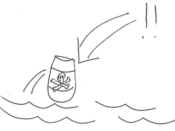
“Help, Pirates!” – Insights from a Disaster Communication Exercise with Experts
Last year, we approached a group of disaster communication experts at the 2016 CAP Implementation Workshop in Bangkok, about 60 people with a profession related to disaster management. We wanted to know how they think about pictograph based communication, what their ideas are, and how they understand pictographs in their own field of expertise. Within…
-

Happy and Prosperous New Year 2017 wishes from the chair of Sahana Software Foundation
The Sahana Software Foundation do our utmost to prepare for more resilient communities worldwide by making high quality information management systems for emergency preparedness, response, recovery and resilience-building accessible to all. This work would not be possible without the generous support and advice of community members. Let me therefore take this opportunity to express my gratitude and appreciation for the…
-
2016 End of Year Update
The SSF had its Annual General Meeting (AGM) on October 27th, 2016. It took approximately 3 hours and 10 people participated. At this meeting, I presented a report on the state of the SSF. Please look over that report and feel free to add comments directly to it. I promise to reply. The AGM confirmed…
-
Extending Early Warnings to Linguistically Marginalized Populations
In a work for the World Meteorological Organization, M. Golnaraghi [1] stated that “it is crucial that warning messages are clear, consistent and include risk information, designed with consideration for linking threat levels to emergency preparedness and response actions and understood by authorities and the population.” However, in its current state of practice, early warnings…
-
ITU Kaleiderscope best paper awarded to SAMBRO
We presented our paper on the “intricacies of implementing the ITU-T X.1303 recommended warning standard for cross-agency situational-awareness in Myanmar, Philippines, and Maldives at ITU Kaleiderscope (2016). It is an IEEE conference sponsored by the Telecommunication Standardization Bureau (TSB). The paper was not technical in the strict sense but discussed ICT policy relevant findings that…
-
Technology Stewardship, is it for the Sahana Habitat?
Last week, I was part of a Research Team that pilot tested a training course designed to build Technology Stewardship capacity in support of knowledge mobilization. The concept originates from Wenger, White, and Smith’s work on Communities of Practice, published in the Digital Habitat. From a Digital Habitat perspective the research team would be classified…
-
Maldives Launches “Dhandhaana” for Early Warning
Dhandhaana in Divehi means “Reach”. This is the name the Maldives National Disaster Management Center (NDMC) has given the Sahana Alerting and Messaging Broker (SAMBRO) implementation. Now SAMBRO powers NDMC to reach the communities at risk with alerts and warnings. The implementation was the a key outcome of the “CAP on a Map” project; funded…
-
Philippines Simulations Evaluation Report and Recommendations
The Philippines Atmospheric Geophysical and Astronomical Services Administration (PAGASA) has implemented the Common Alerting Protocol (CAP) for Tropical Cyclone and Flood Public warnings. PAGASA has an official CAP feed that publishes the “public alerts”. The Sahana Alerting and Messaging Broker (SAMBRO) was implemented to complement and interlink the PAGASA CAP-enabled system to offer a visual…
-
SAMBRO a One-Stop-Shop for the Philippine Media to get Warnings
During the Press Conference, organized by the “CAP on a Map project” in Quezon City, the Philippine Media asked the question, “how would the new system help Philippines?” The new system the they were referring to was the Common Alerting Protocol (CAP) -enabled and Sahana Alerting and Messaging Broker (SAMBRO) technology. The answer was two…
-
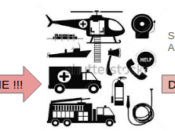
Towards a Research Design: Pictographs in Disasters
The Research Team met at Microsoft Research India, in Bangalore, to formulate a practical and appropriate research design to test the hypothesis – “pictographs, designed for the linguistically challenged, can effectively communicate disaster information for saving lives and livelihoods.” In the context of disaster communication we have identified two key communication requirements, illustrated in the…